 EN
 ES
 FR

Updated: October 2026
Krabi is one of Thailand’s best-known rock climbing destinations, and it’s easy to see why. Huge limestone cliffs rise straight out of the sea, the rock is full of natural holds, and you can spend the morning climbing before jumping into the water for a swim by lunchtime.
People who have never touched a climbing wall come here and do their first climb. At the other end of the scale, experienced climbers travel from all over the world and sometimes stay for months.
This guide covers where to climb in Krabi, what a session costs, whether you need any experience, what to bring and the practical stuff about getting there. We’ve lived and worked on this coast for well over a decade, so we’ll also try to separate what actually matters from some of the generic advice you’ll find online.

Where Is the Best Rock Climbing in Krabi?
The best-known climbing areas in Krabi are Railay and Tonsai, although climbing walls around Ao Nang are becoming increasingly popular too.
Railay is a small peninsula just south of Ao Nang that is cut off from the road by limestone cliffs, so you arrive by longtail boat. Once you’re there, several different climbing areas are within walking distance.
Railay Beach
Railay is where most of the climbing schools are based and where many first-time climbers start.
Popular walls used by schools for beginners include 1-2-3 Wall, Diamond Cave, Thaiwand Wall, Muay Thai Wall and Wee’s Present Wall. They’re scattered around Railay, but the peninsula is small enough that nothing is too far away on foot.
These areas have plenty of beginner-friendly routes and are well bolted. Beginner sessions use top ropes, meaning the rope is secured above you and controlled by the guide from the ground. This keeps falls short and controlled while you concentrate on getting up the rock.
Railay also has plenty of resorts, restaurants and bars, making it a good choice if climbing is only one part of your holiday rather than the entire reason you’ve come to Krabi. If you would like to know more about Railay Beach check out our guide.
Tonsai
Tonsai is the next bay west of Railay and has long been known as the place where more serious climbers hang out.
Accommodation tends to be cheaper and more basic, and the overall feel is more hammock-and-chalk-bag than resort. In a lot of ways, Tonsai still feels a little like Railay did 20 years ago.
It’s also one of the easiest places to meet other climbers if you’re travelling alone and looking for climbing partners.
That doesn’t mean Tonsai is only for experts. There are still climbing schools operating there and some excellent walls for first-timers, alongside plenty of more challenging routes for experienced climbers.
Phra Nang Beach
Phra Nang sits at the southern end of the Railay peninsula beneath some huge limestone cliffs.
A number of climbing schools head towards this area when the weather turns because sections of the cliff are heavily overhung and can remain dry even during very heavy rain.
It’s also one of the best beaches in Railay for swimming and is home to the well-known Princess Cave shrine.

Can Beginners Go Rock Climbing in Krabi?
Yes. A lot of people who climb in Krabi are complete beginners.
You don’t need any previous experience, you don’t need your own equipment and you definitely don’t need to be incredibly strong. If you can climb a ladder, there’s a good chance you can get up some of the easier routes.
Your guide will choose a wall and route that suits the ability of the group.
Don’t be put off if you’ve never climbed before. People who start the morning convinced they won’t get anywhere near the top regularly surprise themselves.
A typical half-day session starts with getting fitted for a harness, climbing shoes and helmet, followed by a short safety briefing. You’ll then walk to the climbing wall, where the guide sets up the ropes.
You climb, come back down, watch the other people in your group have a go, and then usually try several different routes throughout the session.
One experience well worth asking about is the cave walk and abseil between Phra Nang and Railay West.
The route takes you through the limestone mountain behind Phra Nang, eventually reaching a viewpoint overlooking Railay West. From there, you abseil down the rock before following a jungle path onto the beach.
It’s a brilliant way to finish a climbing day.
Not every school includes the cave and abseil in its half-day programme, though, so if it’s something you particularly want to do, ask before you book.
Group sessions are small, usually four climbers to a guide, so you get plenty of time on the rope.
Private sessions are also available if you want one-to-one instruction, or if you’re a more experienced climber who wants to lead climb with a professional guide.
Can Kids Go Rock Climbing in Krabi?
Yes. Some climbing schools accept children from around five years old, although minimum ages vary between operators and activities.
Kids often take to climbing surprisingly quickly. They’re lighter, flexible and generally don’t overthink every move quite as much as adults do.
Some schools also offer reduced rates for children under 10.
If you’re booking for younger kids, let the climbing school know their ages beforehand so they can confirm the session is suitable.
How Much Does Rock Climbing in Krabi Cost?
Prices are generally the same between the climbing schools, they can change a little bit from season to season, but at the time of writing the prices are:
Half-day group session, around 4 hours: 1,500 THB per person
Full-day group session with lunch: 2,600 THB
Kids under 10: around 1,200 THB half day or 2,200 THB full day
Private half day: around 3,500 THB
Private full day: around 5,500 THB
Two-day lead climbing course: around 6,500 THB
Three-day lead climbing course: around 8,500 THB, including multi-pitch training
Multi-pitch climbing: from around 6,500 THB depending on the route
Treat these as a guide rather than a fixed price list.
Prices normally include the climbing equipment, guide and drinking water. Some schools also include the longtail transfer from the mainland, but not all of them do, so double-check when booking.
Full-day programmes commonly include lunch.
Morning sessions generally start around 9am, while afternoon sessions usually begin at around 2pm, although exact times vary between schools.
You’ll also see the same climbing sessions listed through booking websites at different prices because resellers add their own margins. Booking directly with a climbing school can often be cheaper and also gives you the chance to ask exactly what is included before committing.

Is Rock Climbing in Krabi Safe?
This is the question we get asked most, and it’s not something to lose sleep over. The schools on Railay and Tonsai have been doing this for years and they’re very safety conscious.
Listen to your guide, and keep hydrated. Dehydration and sunburn cause far more problems on the peninsula than anything to do with the climbing.
What About Deep Water Soloing in Krabi?
You may have seen old videos of climbers scaling cliffs directly above the sea without ropes and then dropping into the water when they finish.
That’s deep water soloing, and it used to be a big part of Krabi’s climbing scene.
You’ll still find plenty of old blogs, videos and listings talking about it.
However, deep water soloing has been prohibited in the Krabi marine park area for years.
So if you’re planning a trip based on an old article or YouTube video, don’t assume the activity is still available just because it appears online.
There is more than enough excellent roped climbing around Krabi without needing deep water soloing to make the trip worthwhile.
When Is the Best Time to Go Rock Climbing in Krabi?
Pretty much any time.
High season officially begins around November, but that doesn’t mean November is guaranteed to be dry. It can still be wet, and some years December gets plenty of rain too.
At the same time, the low season from May to October can bring weeks of sunshine.
Krabi weather doesn’t read the calendar.
What it rarely does is rain continuously all day, and even during heavy rain some climbing areas remain usable because the limestone cliffs are so heavily overhung.
Local climbing guides know which walls stay dry and where to go when the weather changes, so seeing rain in the forecast doesn’t automatically mean your climbing day is ruined.
The biggest differences between seasons are often crowds and accommodation prices.
December through February is busy, and the most popular walls can get crowded. Outside those months, you may find yourself sharing a wall with far fewer people and paying less for accommodation.
Morning or Afternoon Session?
Choosing between the 9am and 2pm sessions is mostly personal preference. There isn’t a huge difference, and the best wall on any particular day will depend on the weather, sun and conditions.
The morning session can be particularly useful if you want to fit another activity into the afternoon.
A lot of sunset boat trips leave Railay at around 1:30pm to 2pm, so climbing in the morning still leaves time for a second activity later in the day.
How Do You Get to Railay and Tonsai?
There are no roads into Railay or Tonsai, so you’ll need to take a longtail boat.
If you’ve booked a climbing session from the mainland, check whether the climbing school organises your boat transfer as part of the package.
If you’re travelling independently:
From Ao Nang Beach: boats run throughout the day to Railay West. The trip takes around 15 minutes. You buy a ticket at the booth on the beach and the boat normally leaves once it has enough passengers.
From Ao Nam Mao Pier: boats run to Railay East, which is closer to several of the climbing walls and can be a better option when conditions are rough on the Ao Nang side.
To Tonsai: you can walk from Railay West around the headland using the jungle path, or walk around the rocks along the beach at low tide. Longtails travelling from Ao Nang towards Railay West can also stop at Tonsai first if you tell the boat driver that’s where you’re heading.

What Should You Wear and Bring?
You don’t need much.
Wear clothes you can move comfortably in and don’t mind getting chalky and sweaty. Shorts and a T-shirt are fine, while leggings or lightweight trousers can help protect your knees.
Wear swimwear underneath if you fancy jumping into the water after your session.
Bring sunscreen, a hat and plenty of water.
If you’re using sunscreen, put it on well before climbing. Sunscreen-covered hands and limestone aren’t a brilliant combination, so wash your hands properly before getting on the rock.
Harnesses, climbing shoes, helmets and chalk are provided by the climbing school.
Make a Day of It
Quite a few of our guests climb in the morning and sail with us in the afternoon.
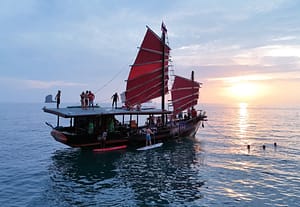
Our shared 4 Island Sunset Cruise picks up in Railay at around 1:30pm, roughly half an hour after most morning climbing sessions finish.
The afternoon is spent aboard our traditional wooden junk boat, stopping around the islands for swimming, snorkelling, paddleboarding and kayaking before dinner onboard around sunset.
Later in the evening there’s also the chance to swim with bioluminescent plankton.
It makes for a fairly big day, but climbing the limestone cliffs in the morning and then seeing them from the water in the afternoon is hard to beat.
If you’re spending more time on the peninsula, have a look at our full Railay Beach guide for practical information on beaches, boats, restaurants, viewpoints and getting around.
Krabi Sunset Cruises is a family-run boat tour business based in Krabi.

Frequently Asked Questions
Do I need to book in advance?
In high season, yes, a day or two ahead. In the low season you can usually walk up on the day.
Can I climb if I'm scared of heights?
Plenty of people with a fear of heights climb at Railay. You set the pace, and if you tell the guide they’ll start you on something low.
Can I just rent gear and climb on my own?
Yes, if you’re an experienced climber. The shops on Railay and Tonsai rent full kits and sell the local guidebook. Beginners shouldn’t.
How long does a half-day session take door to door?
About five to six hours from a hotel in Ao Nang, including the pickup and the boat each way.
Can I combine climbing with a boat trip on the same day?
Only if the boat trip picks up on Railay. The morning session finishes at 1pm, which is too tight to get back to Ao Nang for an afternoon departure.